Monday, 30 May 2016

A World History of Architechture

A World History of Architecture


A World History of architecture is a book written by  Michael Fazio and By  Marian Moffett, it is a book which outlines history oh architecture in a number of different country's and throughout the century's. "Updated with expanded coverage of twenty-first century architecture, this new edition uniquely comprises a detailed survey of Western architecture as well as architecture from the Middle East, Africa, Central and South America, India, Russia, China and Japan. Significant revision also includes photographs and textual discussion of around 50 new buildings. Written in a clear and engaging style, the text encourages readers to examine the pragmatic, innovative and aesthetic attributes of buildings. Artistic, economic, environmental, political, social and technological contexts are discussed" (Michael Fazio, 2013) From this book, i noticed a repetition of materials that has been used constantly throughout the century and also throughout the architects in different locations. Some of these materials are wood and concrete, this is another reason why I have decided to use both materials In my building design and also in my physical model. These Classic materials posses qualities that are acoustic, strong, flexible, aesthetically pleasing and many more.


Concrete mould

now that the MDF mould was all cut and ready to be put together, it is time to start working on the base of the model which will be made out of concrete. to do this, I decided to use the method of the concrete mould where I would create the mould, pour concrete in it, wait till it set and take out the MDF pieces gently. 


I am pleased that the mould did  come out successfully and it has turned out the way I wanted it to, but there where some problems I had to deal with before it was complete. in some of the areas of the mould, the concrete was not wet enough so it did not go all the way down into the mould which caused gaps in the walls. to solve this problem i had to get more concrete but very wet concrete s that i was able to fill it in the gaps. This technique helped fill the gaps and made the mould complete for the base of the model.

Saturday, 28 May 2016

Climate change


It can be stated that climate change is one of the worlds biggest threat to the human race, this is because it has the ability to destroy the world as we know it. The most common topic when looking at climate change is the fact that the icebergs in the north and south pole will eventually melt and cover the world with sea water. although it seems as if there is no stopping this from happening, there is in fact many different ways people can contribute to the  prevention of climate change.
"The Earth's climate has changed throughout history. Just in the last 650,000 years there have been seven cycles of glacial advance and retreat, with the abrupt end of the last ice age about 7,000 years ago marking the beginning of the modern climate era — and of human civilization. Most of these climate changes are attributed to very small variations in Earth’s orbit that change the amount of solar energy our planet receives."(Nasa, climate change,2013) This suggests that the climate is continuously changing, which means that as humans we will have to adapt our lifestyles according to these major changes.


This is a diagram that illustrates climate change effectively and shows what parts of our world are in danger, as evidence on this diagram, the number of the things in danger is very high. on the other hand, some of the ways people contribute to the prevention of climate change is to ride a bicycle rather than driving because driving increases pollution. Recycling is also a popular way of tackling climate change, so that we are not using all of our natural resources.
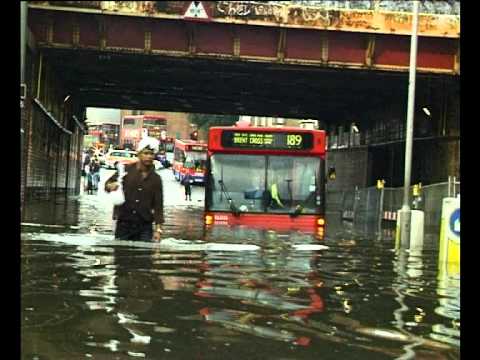
Climate change has a clear connection to my FMP, because as the sea levels are increasing, this means there is more chance of floods and it is time for architects to start designing buildings with climate change in mind.

Health and safety when using machines

Part of my model, is to make a concrete mould as the base and ground floor of the house. To do this, i decided to use MDF to make the mould. Due to the lazer cutter being fully booked, I had to use the saw machines to cut out the different parts of my mould. When using these machines, it is important that the health and safety requirements are met. 


To ensure that I was safe and protected whilst using the saw machine, I made sure I had my goggles, ear defenders and did not pass my fingers past the safety line. The vacuum also has to be on at all times when using the saw machine so that it can get rid of all the dust coming from the machine.


The machines itself is very easy to use, and i was able to guide the MDF in straight lines so that i had a good quality cut. although the laser cutter is quicker and more accurate with straight lines, the mould was successful and i'm confident that it will form the right shape when the concrete is poured inside .


The sand disc was also very useful, this is because it gave an even and smooth surface to the pieces of the mould. although the sand disc also has a vacuum, it produces more dust rather than the saw machine. For this machine I used the same safety requirements and did not pass my fingers past the safety line. 

Marlies Rohmer Architects

Marlies Rohmer Architects, is an Architecture firm based in Amsterdam. It is a famous firm in the area which take part in my different projects around netherlands and the rest of the world. The CEO Marlies Rohmer, is a very established architects in the industry and is the creator of Ijburg district floating houses. I have decided to look at Marlies Rohmer as inspiration, because the ijburg project is very similar to my own.


The technique used in this project to keep the house afloat is a similar technique used in the Amphibious house in marlow on the bank of the river thames. They have used hollow concrete tanks filled with floating materials, this keeps the house floating and the concrete gives the base a good weight to keep the house stable. Although this project is a series of houses, I can still take something away due to the fact its on water but I will experiment doing a series of houses as experiments.


After looking at how this project was designed and constructed, I have decided to use concrete as my base, because it has been used in two different floating home projects. Concrete also passed the experiments against water and it performs well on water. The only negative aspect about the concrete is the brutal texture which some people may not agree with but it adds a sense of protection and shell to the house which makes it harder to break into.


Saturday, 21 May 2016

Little Venice

For research on how people live on floats, I decided to visit little venice where the regents canal meets the paddington arm of the grand union canal. Before people started using the canal as their home, it was mainly used for transporting goods such as coffee, sugar, tea etc into London. It is a very historical place and is special in many ways.


During my visit, I met Gary who has been living in little venice for 5 years. Gary's views are mostly positive rather than negative. He said he managed to save a lot of money because instead of spending 100,000  on a house, he spent 15,000 on a boat for him and his partner. Gary also stated that it is a very peacefully as it is not very populated and the sound of the water allows him to sleep in peace. 


On the other hand, there are lots of down sides to living on a boat. Firstly, it is hard to own a car due to no parking space with residential parking for the people on the canals. Secondly, Gary finds the boat very tight and the head space is very limited for him and his wife. These are problems I will answer if I decide to build my design on water rather than fixed on land.  


Tuesday, 17 May 2016

Material experiments


This is an experiment to help me decide on  materials to use, the materials being experimented in this blog are wooden matchsticks. this material has been extracted from my visit to the RIBA building for the creation from catastrophe exhibition. To respond to this exhibition I have made small match stick model to see the performance of wood in water. This is because in the exhibition the people built their houses with wood as their main material.


This experiment was very successful because as seen in the video, the material floats on water. Its also successful due to many other reasons. The materials is very accessible and cheap which makes the experiment successful because it means I can definitely build the real thing using this material. The aesthetic features of the material is also very realistic when comparing to timbers used in real building, which also makes this materials ideal for me to use.

 Now that I know the material works well on water, I will be building another model in this material based on one of my chosen design ideas so that I can see how it will look for the real thing.
I will be testing other materials that i intend in using for my final model and will document them both on my blog and sketchbook.

Thursday, 12 May 2016

Using sketchbooks to record and develop ideas

The sketchbook is a very important part of any creative subject, this is because it allows the artist to express their ideas more visually rather than in text. Although it is mainly a visual process, annotation is vital because it explains in more detail what is happening on the page and to make it easier for the viewer to understand the artists ideas. Through annotation the artist can also record what has worked, what hasn't and also to give reasons why.

There is no limit or rules on what you can or can not put in your sketch book, it is completely up the the owner. In my case, as I concentrate on 3D design, materials is very important for my sketchbook because it illustrates how my building will look and feel like which is a very important process of research and development.

An example of an experiment that is in my sketchbook is placing two different materials next to each other and comparing which texture has a more ergonomic feel to it, I also got peers to feel both materials and got their views on them. It is very important to document experiment such us this in my sketchbook because i'm then able to return back to that page at a later stage and see why I have chosen that material and without that documentation in my sketchbook i would not be able to go back to that.

Other architects work is also something I stick in my sketchbook because it is there as an inspirational reference and a good form of secondary research. This is also helpful to keep in my sketchbook because it makes it easier for me to see the connection between my research and design development pages and my material research which is evidence to show where everything has been extracted from.


By Pedro Dias

Tuesday, 19 April 2016

Exhibition and Workshop


Last week, me and my peers visited two exhibitions at the welcome collection. Both States of Mind and This is a Voice are very well thought out exhibitions due to the way the images where illustrated and how people used the space to interact with the art work.

After the exhibition, we then did a workshop reflecting on the things we found from the exhibitions and used them to create our own work based on our experience at the Welcome Collection.

The research at the welcome collection helped me with understanding how sound and light can be controlled inside a building, these are important values for a piece of architecture and is something i will do more research on to include it in my FMP.

During the workshop, i also learnt how to use the RISO printer, which is a very colorful way of printing. This technique can we use for my final design pages and diagrams which illustrates the final piece rendered and information about how the design work. These new skills and ideas which i have gained from both the exhibition and the workshop will be researched in more depth and implicated in my FMP as I believe they will enhance my project.


Pedro Dias

Wednesday, 13 April 2016

FMP floods research

My chosen project for my FMP is to design a flood proof house. I have decided to make this my FMP because thousands of houses in the UK are vulnerable to floods, especially the ones near rivers. Millions of pounds are also invested to replace the loses of floods in the UK and I believe architects should have their part in designing houses that are more sustainable to such natural causes which are out of our control. 


In London, the areas which are most at risk of floods is Hammersmith and Fulham. this is because they are located right of the river Thames which means houses in that are should be prepared to expect a flood at any time. Although there are river banks holding back the Thames from flooding London, there is still a chance that it is very possible therefore houses and other infrastructure should be designed with this possible outcome in mind.


My aim with this project is to design a house which is able to stay on soil and keep flood water out, in case river banks fail to hold back the river, This is more of a plan be concept in the flood process, because first thing to do is to keep draining clear and keep the river back so that it prevents flooding. On the other hand, if plan a fails, Architecture would be able to fight of the floods and protect its residents.

pedro dias

Sunday, 6 March 2016

Testing with models and materials

After choosing my final design from 10 different design ideas for my library, I started to experiment with materials to see if they are the correct ones for the final piece. in this test, I am using plastic and paper, this test was successful because the plastic is strong enough to keep upright and hold the structure with ease.

The UHU super glue was also very useful to connect the pieces together, so I will be using it for my final piece. The green paper also worked well both with the glue and with the hard plastic but I will be using a different colour due to the fact it doesn't look like a realistic structure.

For the main part of the existing library that I have decided to keep, I will be using cardboard as the main material for the model because it has the strength to hold up well and it is also very accessible for me. On the windows I decided to use acetate plastic, because it has the same aesthetic features as glass.

Model making part 2

For our second part of model making, we are creating a new model of our own design, but we have to use an existing space or building which we can refurbish or re design completely. Although we have the option of redesigning a building completely, it is more efficient to use the existing building because it is very expensive to demolish an existing building and also re construct a new design.
One of the first activities for this project was to visit my chosen existing space, which in my case is the grove park library. This is a small library in a residential area surrounded by a gym and health centre. it is mainly used by primary school students from Marvels lane and coopers lane primary. During my site visit I surveyed the building, materials on site, number of people that use it and its main purpose and surroundings.


As seen on the plan view of the site, there is a lot of empty green spaces which could be used to build on to include a new feature to the building. Due to this open space in the rear of the building, I will be designing all the land that belongs to the library which will include some landscape architecture and building architecture.


Sunday, 21 February 2016

3D Printing

Due to me not being satisfied with remaking a furniture out of my object, I decided to do some research into bridges and then started responding by drawings many different design ideas for a bridge. once I chose my final idea I then started experimenting with different materials such as cardboard and plastic then went on to draw my design on sketch up as I wanted to 3D print my final piece.
Drawing my design on skatch up was very challenging, therefore i had some help from Milot our teacher that was helping us with the project. The sketch up was a very good experience and I learnt tools on the software.
The hardest part of using the 3D printer was to change the sketch up file into a STL and then X3G which are the only file types that the 3D printer could read so I head a lot of difficulty doing it, at the same time it was very educational.
After taking the 3D printer home, it wasn't very successful, this is because the printer was having some issues where it was stopping halfway through the print. i then decided to go back into Ravensbourne and do the printing there with Milots help but unfortunately the printers there also didn't perform as we had wanted it to. Although I still haven't printed my model, i will still look to print it in the future.

Record, Respond, Remake

As the start of our new brief, we had to choose an object which could be any object with any function. From this object we are to record observational drawings directly from that chosen object. In my case my chosen object is a potato masher, the first thing I did was to record observational drawings of the shape of the object and to crop some parts to see if they could be useful.

After the observational drawings of the potato masher, I then started to draw some ideas but always using the design of the potato masher as my first point of inspiration. In these drawings there where ideas for furniture, fire place and many more. This experiment is the respond process in the brief where I'm responding to the object combining both my ideas and the objects original design.
Some of these ideas where very successful, one of these is the idea to use my objects design to remake it as a furniture set of  a dinner table and chairs. Although I have done some progress for it to be a furniture, I'm considering that it could also be a bridge.


Sunday, 24 January 2016

Health and saftey


During the making of my final outcome, like many other students I also used the lazer cutter which is a very accurate machine when working with materials such as cardboard, acrylic, wood and many others. 
When using the lazer cutter, it is very important that we knew the basic health and safety rules so that it is safe for the users and the people around. Some of the protective equipment required to use the machine are goggles, gloves and an apron. You should also be aware of signs and instruction around the room which direct you on how to use the machine accurately. The prototyping room is also filled with many different types of machines so being aware of trip hazards other machines may cause or wires is also very important. 


This is a footage I have taken when my 7cm by 7cm cardboard squares where cut on the lazer cutting machine.I was very happy about the outcome of the squares as they where to the exact measurements as expected from a machine. The experience of using the lazer cutting machine was very safe because I followed the instructions on how to use it accurately and safely.

Pedro Dias


Tuesday, 19 January 2016

Tate Modern Visit

For the start of my new project, which is Joints and fittings, I went to the Tate modern gallery to find some inspiration for my final outcome. At the Tate, there was an exhibition of Abraham Cruzvillegas work which filled the whole of Turbine Hall. The work consists of wooden triangle plant pots which where scattered around the room creating a very intriguing pattern made of triangles.


Hyundai Commission 2015: Abraham Cruzvillegas: Empty Lot

I have chosen to blog these two images for the reason that they look the same but are very different. The image above was shot from an eye level, which illustrates the view one would have if they stood at that exact spot. What I like about this view is the way the triangle pots overlap over one another due to the change of ground level as you go to the end of turbine hall.
The second image, although taken from a similar angle, is more raised up compare to the first image, giving it more of a birds eye view.
This projects is about joining and fitting different materials together without using glue, and one thing I like about Abraham's work is the fact that he has used finger joints and dovetails to join the wood together which is what my project is about and also a technique of joining two materials together that I may take to my own work.

Pedro Dias


Tuesday, 12 January 2016

Speaking and listening review


This week, we have developed our portfolios which contains our best work. Before putting together my portfolio I did some research on Le Corbusier's digital portfolio just to get some inspiration and insight on how professional architects present their work.

After putting my portfolio together I then had to present it to the class so that I could receive some feed back on both my portfolio and presentation as a whole.

As positive feed back, it was said that my chosen images for my outcomes had good quality and striking photographs. The layout of my images was also done correctly and they like how each project where all on the same pages. Another thing that was very useful was my confidence in my outcomes and delivery when talking about the design processes.

On the other hand, some of my images where too small which made it hard for my peers to see. There were also work missing which could enhance the portfolio and show a larger variety of work. This can be accomplished if I include the passport project and the digital media project.

Pedro Dias


Thursday, 7 January 2016

Le Corbusier Portfolio

Le Corbusier is a very famous Swiss architect who was born on 6 October 1887, he was also a painter but eventually concentrated more on architecture. I have chosen look at Le Corbusiers portfolio for inspiration because his style of design is very modern and advanced for his era which was around the 1930s. Some of his most successful designs such as La Villa Savoye is a very beautiful modern piece and almost looks like it was designed in the 21st century.
undefined
This portfolio is very eye-catching, compare to other portfolios I have seen before. The use of black on one page and black on the other makes it very visible and also shows a sense of contrast between the photograph of the final piece and the photograph of the design process or the development page.


The way the photographs are laid out makes the pages very clean to look at, the spacing at the top and bottom of the photographs look exactly the same which centres the photograph directly in the middle of the page. I also like the fact he has included the material/colours he gained from his experiment on one page and the final outcome on the other which shows where the final idea has come from. This is one of the techniques I will take from Le Corbusiers portfolio into my own.

Sunday, 3 January 2016

During our Christmas break, the project brief was to come up with a creative solution that could change peoples opinion on climate change which will help them t be more conscious of things like recycling so that we wont have to use raw materials every time we produce new products. After visiting London Dust, an exhibition which was based on London in the 50's, I had many ideas to create a architecture piece using paper. Although this was my starting point, I then decided to use recycled cardboard instead.


I decided to use recycled cardboard instead because I wanted my piece to give recycled materials more importances rather than them just being seen as rubbish. By constructing a frame construction model it was my intention to show that architects can help in climate change by using recycled materials to create architecture models which is a very expensive and affective process to the climate  due to the amount of plastic used in creating these models. In my opinion, I believe the final piece could have been bigger in the sense that it would increase the number of frames which makes it more interesting to look at, but overall I believe the message is accurate to the brief.

Pedro Dias